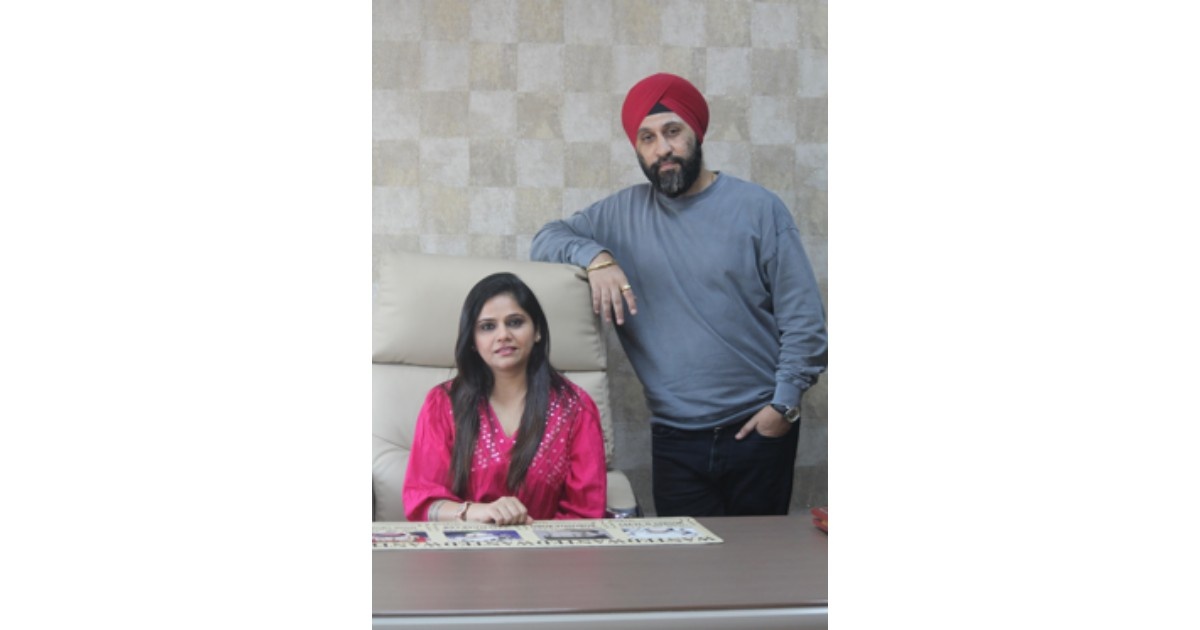
By Dalbir Singh, Co-Founder, & Arushi Govil, Co-Founder
India’s education system continues to focus on preparing students for examinations, while the industry is increasingly looking for individuals who can execute and deliver from the start. This growing mismatch between how talent is trained and what the industry actually needs is becoming more evident, and its impact is being felt across both hiring and productivity.
At the same time, the format of learning itself has largely remained unchanged. Curriculums, teaching methods, and evaluation systems continue to follow legacy structures, even as the world around them evolves rapidly. This has created a structural gap where education is still operating at an older pace, while industries, especially creative and technology-driven sectors, are moving significantly faster.
For a long time, education in creative disciplines has been anchored in a linear model textbook, classroom lectures, standardized assessments, and certifications. This system was effective in an era where knowledge changed slowly. However, creative industries today operate in a very different reality fast-moving, tool-driven, and highly dependent on applied skills rather than theoretical understanding.
What’s emerging now is a clear divergence between what traditional education offers and what the industry demands. Students increasingly prioritize certifications, often viewing them as a gateway to employment. While credentials provide validation, the job market is shifting its focus toward demonstrable capability portfolios, real project experience, and adaptability with tools. In creative sectors like animation, VFX, gaming, and digital content, employers are less concerned with marksheets and more interested in whether a candidate can execute under production conditions. This disconnect is becoming more visible as the Media & Entertainment industry expands.
At the same time, the government’s push towards the AVGC sector and the larger Orange Economy is opening up new opportunities in animation, VFX, gaming, and digital storytelling. With this support, creative industries are steadily evolving into a structured career pathway rather than a niche domain. India’s Media & Entertainment industry is already over ₹2.7 lakh crore (~$30 billion) and continues to grow, yet the demand for skilled talent is rising at a faster pace. Despite a large workforce, the industry is expected to require over 2–3 lakh additional skilled professionals in the coming years, while many graduates still lack production-ready capabilities.
This is where Macra Academy powered by Kayhan Entertainment Studio fits into the larger conversation. Founded by Arushi Govil and Dalbir Singh, both bringing global production experience, Macra is designed to bridge the gap between traditional education and real industry expectations. Rather than focusing solely on theory or software-based instruction, the academy emphasizes how creators think, collaborate, and execute within real production environments.
The approach is structured around real-world application, where learning is aligned with actual production environments, ensuring that creators are trained to think, adapt, and deliver in real time rather than just complete coursework.
Macra operates as part of a broader ecosystem powered by Kayhan Entertainment, a studio focused on building original, culturally rooted IP for global audiences.
What makes this model distinct is the direct integration between Macra Academy and the Kayhan studio. While many studios operate independently of training ecosystems, and many academies function without real production exposure, Kayhan brings both together within a single integrated framework, ensuring that learning is continuously informed by real industry pipelines.
This integration ensures that learning is directly connected to real production pipelines and industry requirements. The model is designed not just to train but to transition learners into practical roles through hands-on projects, mentorship, and internship opportunities, enabling them to gain real-world exposure before entering the workforce.
For founders Arushi Govil and Dalbir Singh, the focus extends beyond training alone. Their vision is to identify and upskill fresh talent, particularly from tier 2 and tier 3 cities, where access to quality education and industry exposure remains limited. By combining structured learning with mentorship and real production experience, the aim is to build a more inclusive and industry-ready talent pipeline while strengthening India’s position in the global animation and VFX ecosystem.
Kayhan Entertainment itself functions as a creative studio and IP-building platform, driven by original storytelling rooted in Indian culture while targeting global audiences. Its expanding IP slate, including “Chote Tara Ka Bada Gadar” and FAB 5, reflects a deliberate move toward building scalable, character-driven franchises that can extend across animation, digital platforms, and future immersive formats.
As AI continues to reshape creative workflows, its role is becoming central to how skills are defined and applied. From ideation to asset generation, editing, and automation, AI tools are accelerating production cycles and redefining efficiency benchmarks. In this environment, the emphasis is shifting from rote learning to problem-solving, adaptability, and the ability to work alongside intelligent tools. The creators of the future will be those who can combine strong fundamentals with AI-assisted workflows, continuously upgrading their skills to stay relevant in an evolving industry landscape.
This shift signals a larger change in how creative education needs to evolve. The focus is no longer on producing graduates, but on building creators who are ready to contribute from day one. As the industry continues to scale, adopting more integrated, production-aligned learning models will become critical to building a future-ready workforce and sustaining India’s position in the global creative economy.
This article has been co authored by Dalbir Singh and Arushi Govil, Co-founder, Macra Academy . Views are personal